Pushing Yourself Too Hard Versus Not Pushing Yourself Hard Enough

Athletes trying to find their physical limitations know that a certain amount of injury is inevitable if they want to reach their goals. Sedentary people frequently will try to do whatever they can to rationalize why it is better to avoid working out. And the rules for what constitutes an appropriate workout regimen change over the course of a person’s life. As a younger man, I worked out until all my joints were sore then I took some NSAIDs and worked out some more. I still feel the pain of my choices, but I don’t regret them because I found my physical limitations.

Or perhaps I should say, I don’t regret my choices yet. Now that I’m older, I’m far more conservative. If I think that my younger self would have taken an anti-inflammatory and pushed through the pain, then I know that it’s time for a significant break. But I’ve also had to think a lot about injury prevention. I don’t want to become so conservative that I become meek, but I don’t want abandon what remains of my athletic potential.

Cross Training

I’ve made cross training mandatory. I avoid concerns about personal records. At a certain point in your life, you just have to accept that your personal records are all behind you. My workout routine has become pretty simplistic. I hike one day a week and do calisthenics another day a week.

Pain & Fatigue

As conservative as I try to be, my natural tendency is to make my workouts longer and harder. So I have to focus on pain and fatigue. When I feel that some areas of my body are getting sore and staying sore or just feeling and staying in a state of fatigue, I change up my routine. And if changing up my routine doesn’t work then I back off and if backing off doesn’t work then I stop. I always try to stay ahead of a potential injury no matter how minor it may be. I didn’t have many major injuries when I was younger, but whenever I feel pain, it is in usually in a place where I didn’t experience a major injury.

The Common Denominator

Unless your goal is to find your physical limitations, I don’t recommend trying to fight through the chronic pain barrier. And even if you do want to find your physical limitations, pushing yourself that far has questionable efficacy on performance enhancement.

Having said that, you can’t be a wimp. Nobody gets into shape without being tired and sore. There have been textbooks filled with how to cycle through training schedules. But almost all of them say the same thing: You’ve got to increment the stress a little bit at a time, and you’ve got to be patient.

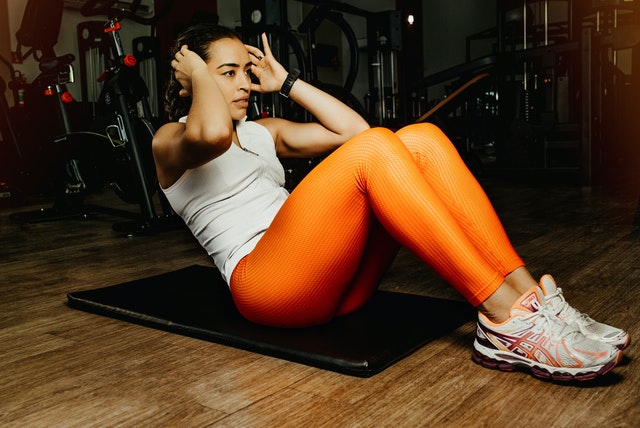
Image Credit

Foundational Hip Strength

The hips are complicated, and it’s difficult to give fast generalized advice on improving them when they have problems. This is one of those articles where it feels incumbent upon me to remind my readers that I am not doctor or an athletic trainer, and you should consult with one before performing this or any exercise program. However, speaking anecdotally, I have found that there are two exercises that have had a high degree of success in improving hip functioning in both myself and my athletes.

Sit Ups

That’s right. You may have heard over the years that somehow they’re bad for you or inadequate. and it seems that they are only getting an even worse reputation. The problem with this line of thinking is sit ups are a simple and well known exercise, so it is easy for someone to try them and perform them the wrong way and develop a reputation for being dangerous. Further, it’s easy for an exercise to get a reputation for not being dangerous if few people have had the opportunity to injure themselves with it. Moreover, even if an exercise isn’t dangerous, it doesn’t necessarily mean that it is effective.

Sit ups are one of the most functional exercises a person can perform. Think about it. How do you get out of bed every morning. My experience is it is an excellent way to build hip and core strength. Just make sure you perform them with proper form. Touch the tips of your fingers to the side of your head. Don’t interlace your fingers behind your head. And make sure come all the way up and all the way down in a controlled manner.

Kick Backs

I’m talking about the exercise that you see in the video. A lot of people know these as glute kick backs, and use them to develop their butt. And for years, I thought of them the same way, but as I’ve gotten older, they’ve become a staple movement. With age, I’ve become increasingly aware of the imbalance in strength and stability between my right and left legs, and this exercise has been excellent for offsetting this imbalance.

I have also noticed these imbalances improve as I have performed sit ups. I stopped doing sit ups for quite a while because of their reputation; but once I started doing them again, I only noticed improvements, and I didn’t notice any side effects.

Video Credit

Image Credit

Working Out Without a Gym

The pandemic may have made you question whether or not heading back to the gym is worthwhile once it’s over. If you’ve been working out at home, you’ve almost certainly noticed that you have a substantial amount of extra time due to not having to commute, and you might have decided that you don’t want to give that up. However, you may be wondering whether or not the workout you’ve been performing is as adequate and comprehensive as what you may get in a gym. Well here’s a check list of a minimal amount of equipment that you’ll need if you want to keep working out at home without sacrificing the comprehensiveness of your workout..

Space

Space is definitely the most important thing that your going to need. This isn’t meant to imply that you need an entire garage gym, but you need a place that isn’t in the way and everybody in your household regards as a workout space. This means that it shouldn’t be a place where people are going to leave a lot of stuff that will be in your way.

Mats

You’ll want one or more mats to protect your floor. Ideally, that mat will sit on a solid surface. Hopefully, your house isn’t wall to wall carpet. You can workout on carpet, but your probably going to sweat on it, and it’s probably going to smell,

Dumbbells

Ideally, you should get two sets of dumbbells: a lighter set and a heavier set. You’ll have to decide what weights work for you. You can get a single set that allows you to change the weight, but you’re not going to want to change the weight in the middle of a workout. You can start with a changeable set that changes between five and twenty pounds.

Pulling Bar

Technically, you can exercise your back using just weights, but my experience has been that that leads to a back workout that is not comprehensive. You should probably get something that you can use to pull from the ground like an inverted row bar or a pull up bar that you can hang off of a doorframe.

Exercise List

Now you can try this starter workout using the equipment you just bought. Try doing it twice a week:

  1. Goblet squats (1 x 15)
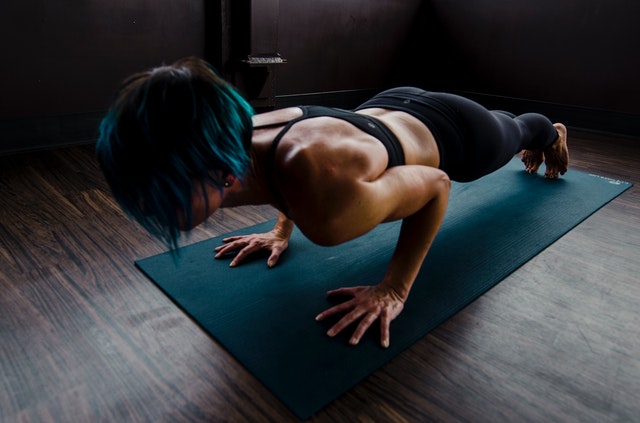
  2. Push Ups (1 x 8)
  3. Lunges (1 x 20 10 reps each leg)
  4. Pull Ups (1 x 5) or Inverted Row (1 x 8)
  5. Sit Ups (1 x 10)
  6. Bent Over Row (1 x 8)

Rest two to four minutes in between each exercise. Repeat this exercise series three times and perform it twice a week with two to three days rest in between each workout. You can also substitute this workout one day per week with a long four to six mile walk or hike.

Image Credit